
Managing Dubsado Workflows: Starting, Tracking, and Updating

By Ema Katiraee, Certified Dubsado Specialist
Workflows (or flows) are the most powerful feature in Dubsado, and also the most complex. It takes time to get comfortable with them, and there are a lot of small details that aren't covered in most tutorials.
In this post I'll answer some of the most common questions I get about workflows and share tips to help you build, edit and use them with more confidence. Some of these are quite specific and hard to find answers to elsewhere, so hopefully this saves you some time.
Haven't built your first workflow yet? Start with how to create a Dubsado workflow from scratch in 8 steps - this post picks up once you've already got one built and want to manage it well.
How Do I Start a Workflow?
There are a few different ways to activate a workflow in Dubsado depending on how your process is set up.
Start a Workflow using a lead capture form
You can connect a lead capture form to a workflow so it triggers automatically when someone submits the form. There are two ways to do this:
Option 1. Connect the form to a single flow
This works if all your leads follow the same process.
Go to the lead capture form Settings → under Default flow, select the flow you want to connect.
Every time this form is submitted, it will trigger that flow automatically.
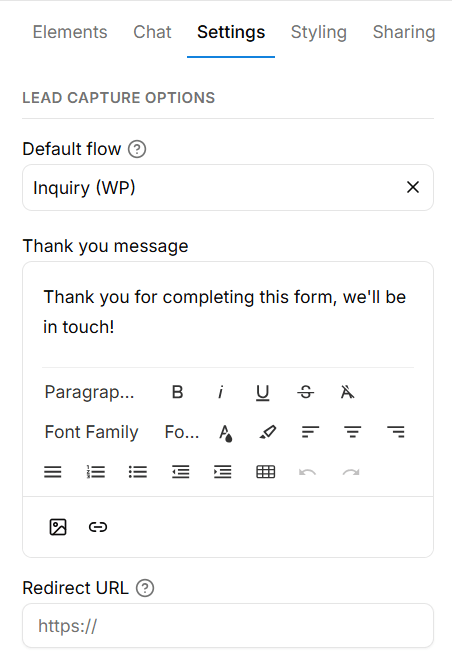
Default flow setting in lead capture form
Option 2. Use a flow element inside the form
This works if you want different leads to trigger different flows based on their answers.
Add a flow element to your lead capture form. This creates a dropdown question in the form. Set up the answer options and assign a different flow to each one.
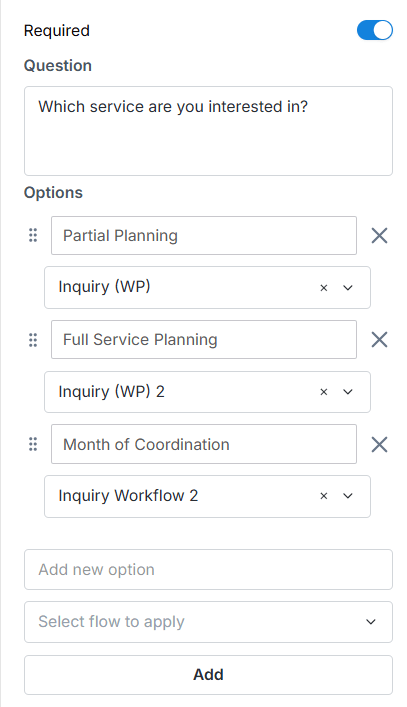
Flow element block inside lead capture form
Start a flow from a public proposal
You can connect a flow to a public proposal so it triggers automatically when a client submits it.
Go to the Form Settings and toggle on "Create new project once proposal is completed." Once that's on, select your flow under Default flow.
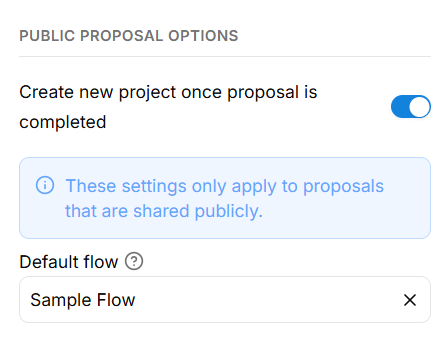
Default flow setting on a public proposal
Start a flow manually
This lets you choose exactly which flow to apply to a project.
Open the project → go to the Flows tab → click ⚡Start a Flow → select the flow from the dropdown and click Start Flow or you can also click Add and edit if needed
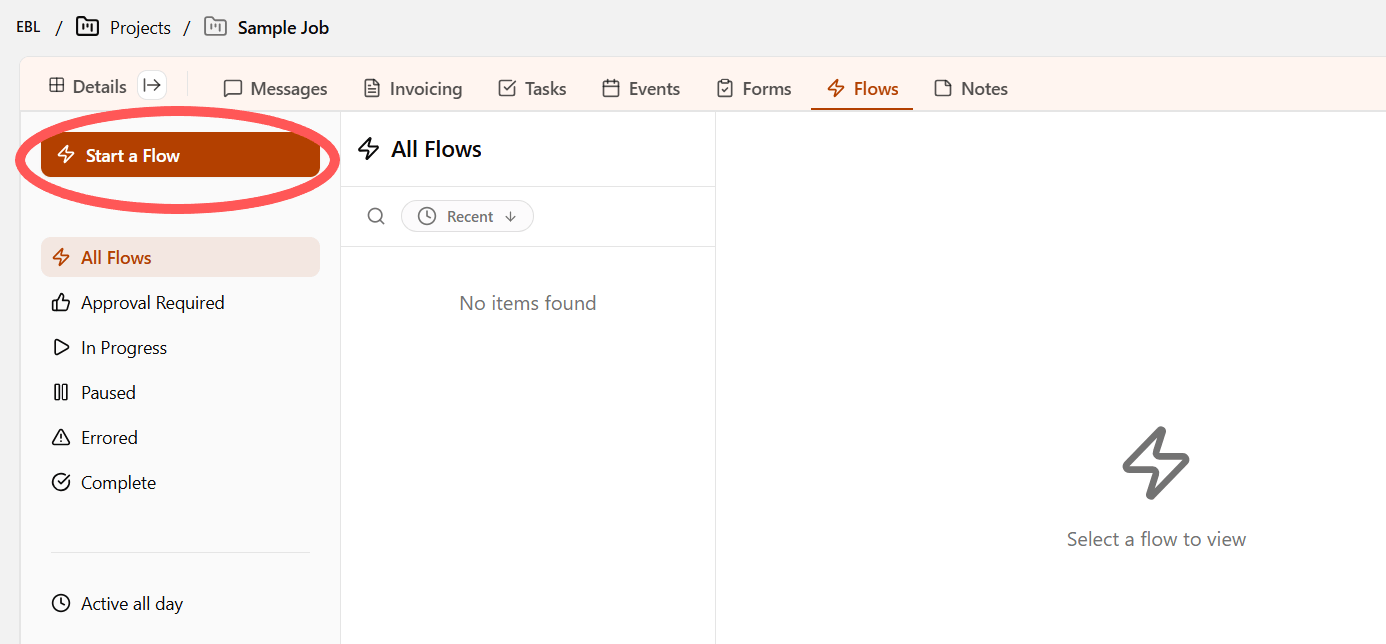
Apply a flow manually inside a project
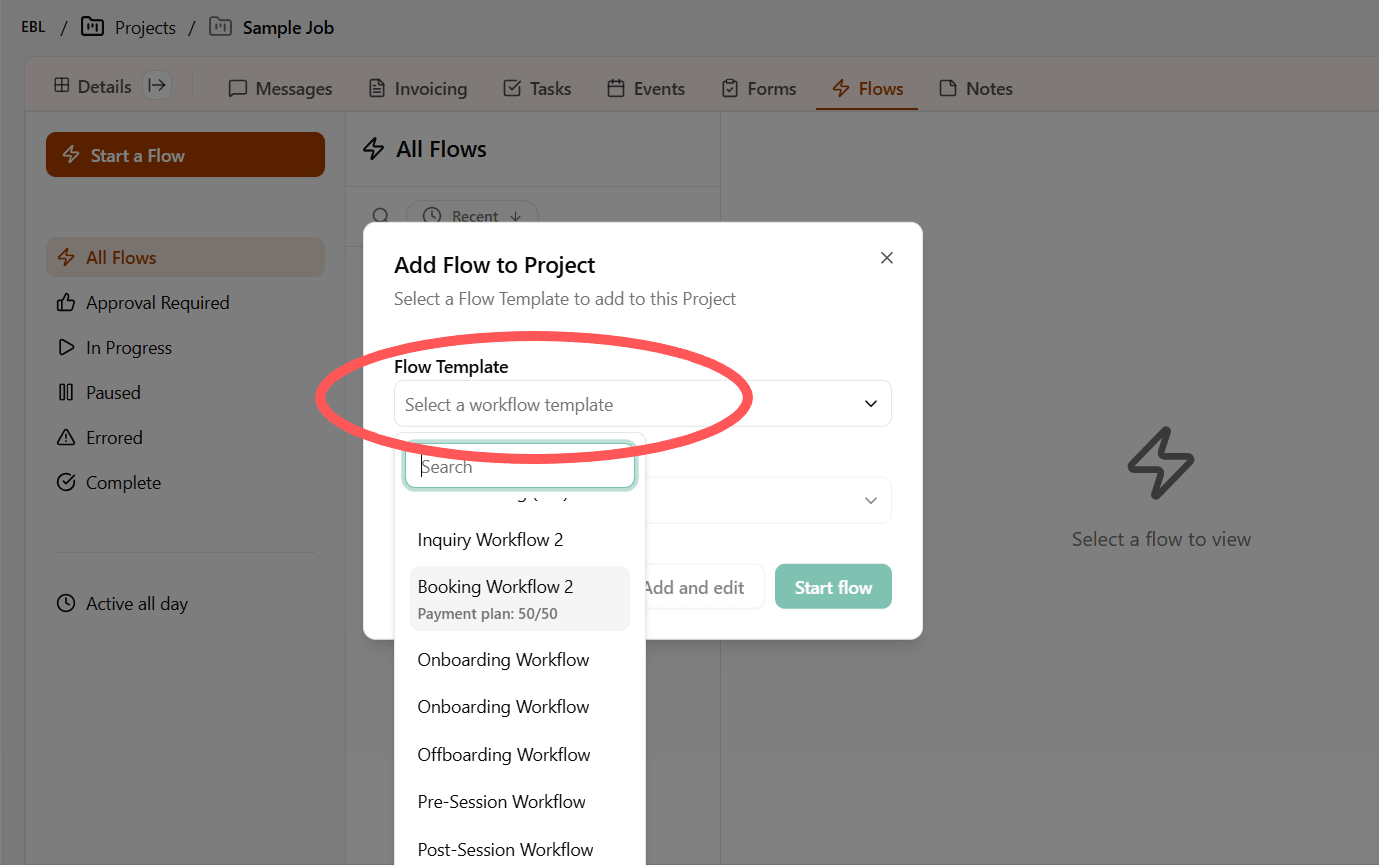
Select the flow template from the dropdown menu
Once applied to the project, you can edit the flow without changing the original template. If certain steps don't apply to a specific project, you can remove them after applying, as long as they haven't already run.
How Do I Create a New Workflow?
There are two ways to create a new flow:
From scratch: In your flow templates area, click + at the very top to create a new flow template and start adding actions.
Duplicate an existing workflow: Select the workflow you want to copy and click the Copy icon. You can edit the duplicate without affecting the original. This is the faster option if your new flow is similar to one you've already built.
How Do I Know Which Clients Are in a Workflow?
In 3.0, each flow template shows a simple "Used in X projects" count near the top. It won't break down which specific clients or projects those are, or show step-by-step status the way earlier versions did. So if you need to track exactly where an individual client stands, you'll need to check that from inside their project directly rather than from the template view.
In Dubsado 2.0 you can still check the status of every project running a specific workflow directly from the workflow template. Go to the workflow template → click the gear icon ⚙️ on the right → scroll to the bottom and click View Workflow.
You'll see a chart showing each project and client name, along with whether their workflow is active, completed, or paused. You can also see the status of every individual step, whether it's completed, in progress, deleted from that project, or failed to run.

Workflow overview chart in Dubsado 2.0
What Does "Update Project" Mean?
At the top of flow templates in Dubsado 3.0 you'll see a button that says Update Project. The button will be active if the flow is being used in at least one project. Unlike 2.0, if no projects are currently using the flow, the button is disabled and you won't see the warning popup at all.
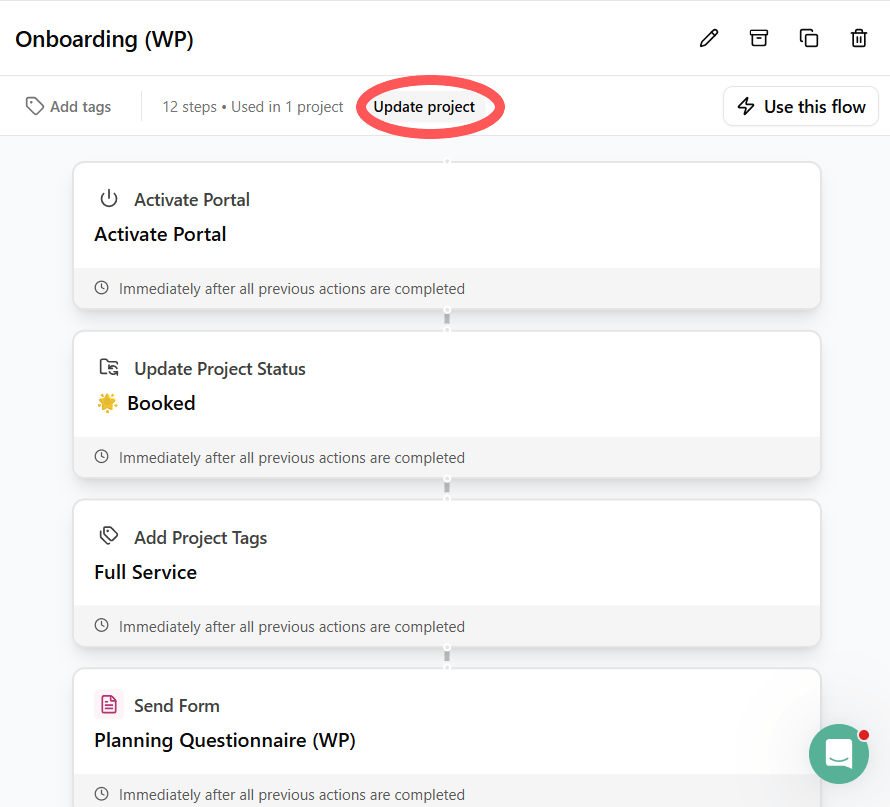
Update project button in Dubsado Flows
If you click it, you’ll see the following warning message:
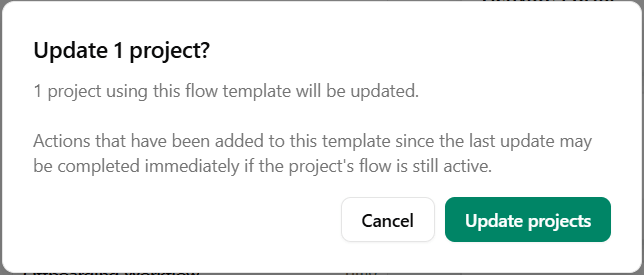
Warning when clicking update project button in a Dubsado flow
If you've made changes to a flow template and click this button, those changes will be pushed to all projects currently running that flow. It's a way to bulk update without going into each project individually.
A few important things to know before you use it:
Any new actions you've added will be placed at the end of the flow for active projects
Actions that have already been completed in a project will not run again, even if you've edited them
It's a useful feature but use it carefully. Make sure the changes you're pushing actually make sense for projects that are already mid-flow before you click.
Tutorial Video
This video walks through Dubsado 2.0, covering how to start workflows, create them, track which clients are in a workflow, and what Update Project Workflows does. The core concepts still apply in 3.0, but the buttons and screens will look a little different from what's shown here.
Workflows Not Running the Way You Want?
If you've worked through these tips and things still aren't clicking, it might be worth having someone take a proper look. That's exactly what my done-for-you Dubsado setups are for - book a discovery call and we'll figure out what's going on.