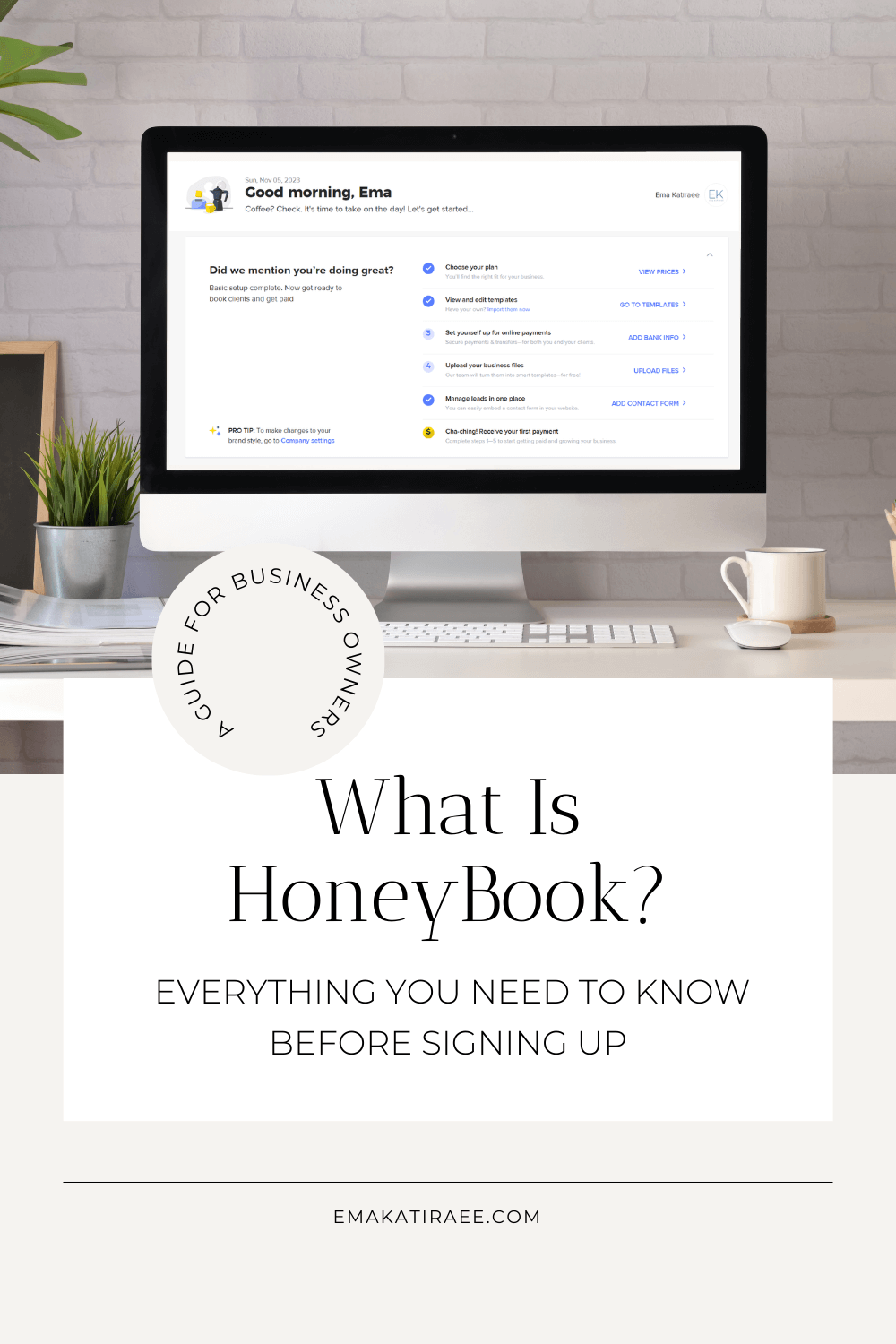
What Is HoneyBook? Everything You Need to Know Before Signing Up
Last Updated December 2025 | By Ema Katiraee, Systems Strategist
TL;DR: HoneyBook is a CRM built for small, service-based businesses. It handles client communication, scheduling, contracts, invoices, and automation in one place. It's easier to set up compared to other CRMs, offers stronger conditional-logic automations, and works well for photographers, wedding planners, coaches, and designers. The tradeoff: it's only available in the US, Canada, the UK and Australia, and gives you less control over form and email customization than some alternatives. Plans start at $29/month. Full pricing, features, and an honest breakdown of who it's actually a good fit for below.
Disclaimer: This post contains affiliate links. If you sign up using my link, I may earn a commission at no extra cost to you.
If you've been looking into CRM tools for your service-based business, you've probably come across HoneyBook. It's one of the more popular options out there, and for good reason - it packs a lot into one platform and is genuinely easy to get started with.
This post covers what HoneyBook is, what it does, who it's a good fit for, and what makes it stand out. If you're still deciding between HoneyBook and Dubsado, I have a full comparison post for that: Dubsado vs. HoneyBook.
What Is HoneyBook?
HoneyBook is a client relationship management (CRM) software built for small, service-based businesses. It brings your client communication, scheduling, contracts, invoices, and automations into one place so you're not bouncing between five different tools to get a client booked and onboarded.

The HoneyBook dashboard on desktop and mobile
What is HoneyBook Used For?
The short answer: managing your entire client process from first inquiry to final payment. Here's what that looks like in practice:
Client communication - all your emails, files, and client updates live in one place per project, so nothing gets lost in your inbox.
Scheduling - clients can book directly from your availability without the back-and-forth. You can sync your calendar and add your branding to the booking page.
Proposals, contracts, and invoices - HoneyBook uses "Smart Files" that combine all of these into a single document. Your client can review the proposal, sign the contract, and pay the invoice without leaving the page.
Payment tracking - accept credit card and ACH payments, set up recurring billing for ongoing services, and automate payment reminders so you're not chasing people down.
Automations - set up sequences that trigger based on what your client does, like automatically sending a welcome email when someone books, or a follow-up if a contract hasn't been signed after a few days.
AI tools - HoneyBook has added some AI features worth knowing about, including meeting summaries and an email composer that can help you draft quick, on-brand responses.
Key Features of HoneyBook
Invoicing and Payments
HoneyBook handles the full payment side of your business - clients can pay by credit card or ACH transfer, you can set up recurring payments for ongoing services, and automated payment reminders go out without you having to think about it. There's also an enhanced payment status tracker so you can see exactly where a payment is at any point, from the moment it's charged to when it lands in your bank account.
Contracts
HoneyBook's contracts come with professionally designed templates you can customize to fit your business. Smart fields auto-fill client-specific details so you're not manually editing every document. You can track whether a contract has been viewed, signed, or is still sitting in someone's inbox - and set up automated reminders if it hasn't been completed.
Smart Files
Instead of sending your client separate links for a proposal, contract, invoice, scheduler, and questionnaire, HoneyBook lets you combine any of those into a single file. Your client gets one link and moves through each step in order - no jumping between emails or getting confused about what to do next. It's gives you a clean booking experience, and something other CRMs like Dubsado don’t provide in quite the same way.

A HoneyBook Smart File template combining a proposal, scheduler, invoice, and questionnaire into one link
Scheduling
Clients can book directly from your availability without the back-and-forth. Your calendar syncs automatically, you can add your branding to the booking page, and automated reminders go out before appointments to cut down on no-shows.
Automations
HoneyBook's automations support conditional logic, meaning you can build flows that branch based on what your client does or selects. You can send a different follow-up depending on which package a client chose, trigger different next steps based on whether a form was completed, or use tags to kick off entire sequences automatically - tag a lead as "ghosted" and a follow-up sequence starts on its own. There's also an AI automations builder that lets you describe what you want an automation to do in plain language and builds the whole thing for you.
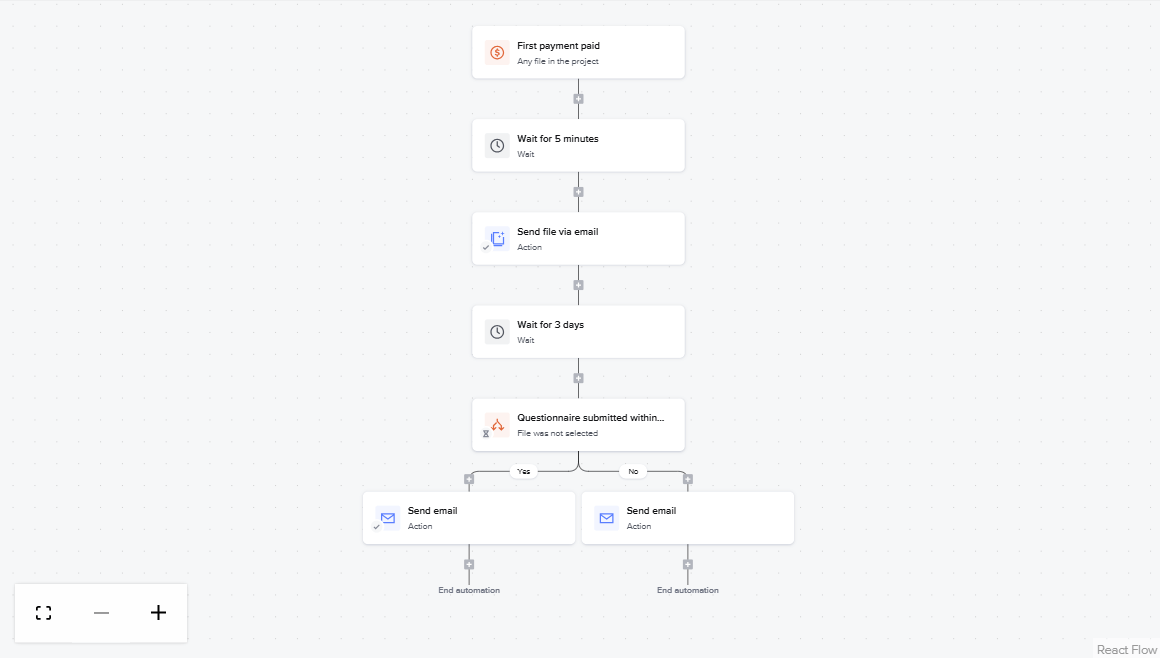
HoneyBook's automation builder with conditional logic
AI Tools
HoneyBook has added a solid set of AI features worth knowing about. There's a built-in AI chat that can answer questions, pull project details, or help you draft content. An AI meeting notetaker transcribes client meetings. Automated follow-up suggestions identify leads you haven't heard from and draft reply emails for you. And AI-powered daily priority lists can be delivered daily so you always know what needs attention first.
Client Portal
HoneyBook's client portal got a significant update in 2025. You can now customize fonts, colors, and images to match your branding, and clients can access their portal with a magic link - no username and password required.
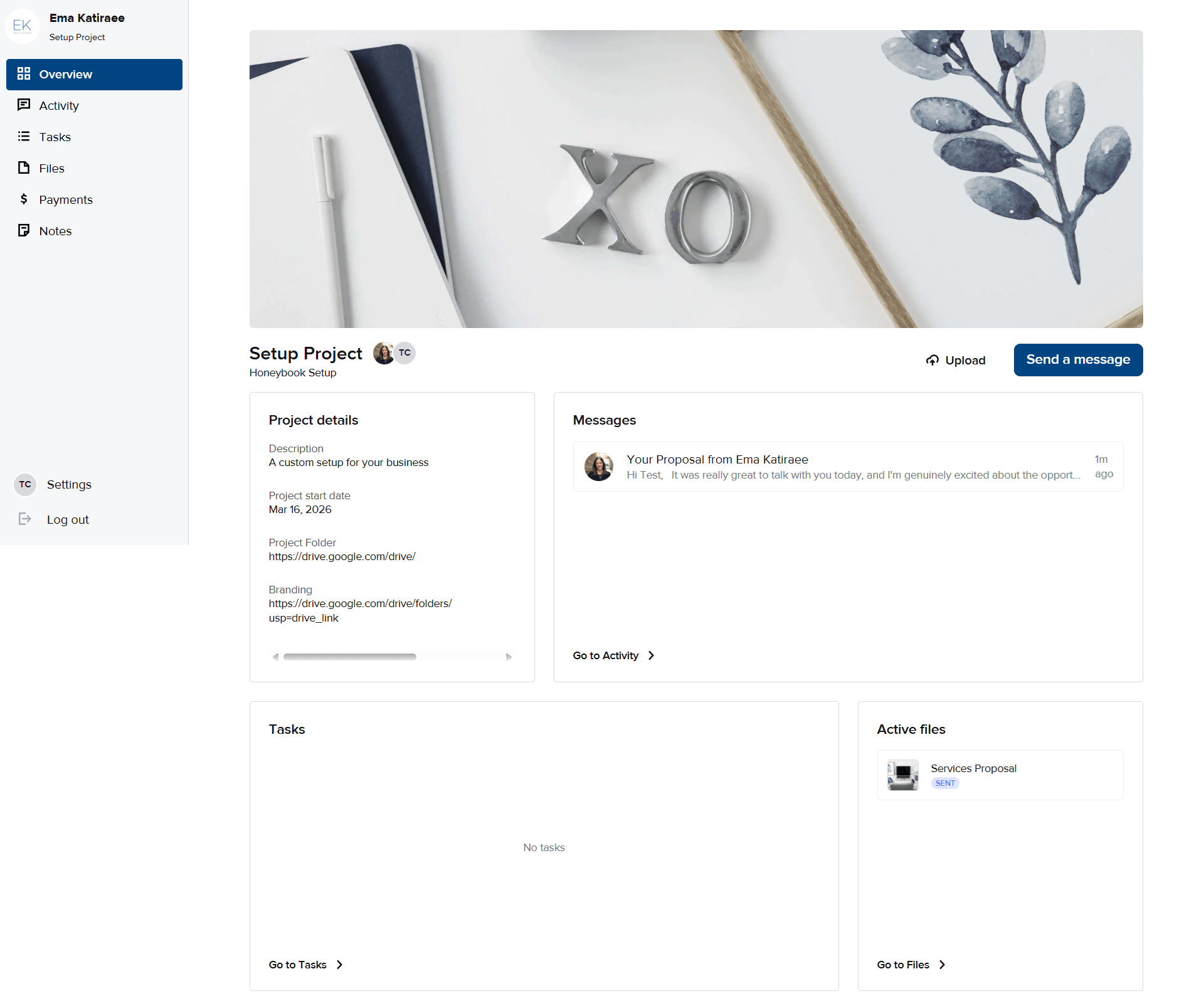
The HoneyBook client portal showing a project overview
Who Is HoneyBook For?
HoneyBook is built for small business owners who work directly with clients on a project or service basis. It's a good fit for:
Photographers
Wedding planners
Coaches and consultants
Designers (interior, graphic, web)
Event planners
If you have a repeatable client process and you're spending too much time on admin work, HoneyBook is worth a look.
Still weighing your options?
If you need something that works outside the US, Canada, the UK or Australia, or want deeper control over form and email customization, Dubsado might be the better fit — see the full comparison in my Dubsado vs. HoneyBook guide.
What Sets HoneyBook Apart?
A few things make HoneyBook stand out from other CRM options:
Ease of setup: HoneyBook has a guided onboarding experience that walks you through setup step by step. It loads templates based on your industry, so you're not starting from scratch. For people who find tech setups overwhelming, this is a meaningful difference.
Smart Files: you can combine multiple types of forms, contracts, invoices, and even schedulers into a single file - this sets it apart from Dubsado, where you're limited to just a proposal-contract-invoice combination. Your client gets a single link and goes through each step in order. It gives you a really clean booking experience and simplifies things for your clients so they don't get confused about the order of steps or have to click on multiple links to complete different documents.
Multiple participants per project: HoneyBook lets you add more than one client contact to a project. Both people can view and interact with the same forms and contracts, even when sent through automations. This is especially useful for wedding professionals working with couples.
Template library: HoneyBook includes a solid library of pre-built, professionally designed Smart File templates. They're easy to customize and a good starting point if you don't want to build everything from scratch.
Automations with conditional logic: this is where HoneyBook genuinely pulls ahead of Dubsado. The ability to build flows that branch based on client behavior gives you a level of flexibility that Dubsado's workflows don't currently match. The main tradeoffs: you can't customize emails or forms before sending them out, and form design is more limited than Dubsado.
Ready to Try HoneyBook?
HoneyBook offers a 30 day free trial so you can poke around before committing. When you're ready to sign up, use my promo code to save 30% off your first year.
FAQ
How much does HoneyBook cost?
HoneyBook has three paid plans: Starter at $29/month, Essentials at $49/month, and Premium at $109/month (all billed annually). Monthly billing is also available at a higher rate. You can save 30% off your first year using my promo code. For a full breakdown of what's included in each plan, see my complete HoneyBook pricing guide.
Does HoneyBook have a free trial?
Yes - HoneyBook offers a 30 day free trial so you can test the platform before committing.
Is HoneyBook available outside the US?
HoneyBook is only available in the US, Canada, the UK and Australia. If you're based outside of those countries, Dubsado is the better option since it works anywhere you can connect Stripe, Square, or PayPal.
Is HoneyBook easy to use?
Yes - it's one of the easier CRMs to get started with. The guided setup walks you through everything step by step and loads templates based on your industry, so you're not starting from scratch.
How is HoneyBook different from Dubsado?
HoneyBook is easier to set up and has stronger conditional logic automations, a more comprehensive mobile app, and Smart Files that combine multiple steps into one. Dubsado gives you more control over form design and branding, lets you edit emails and forms after a workflow has started, and works globally. For a full breakdown, check out my Dubsado vs. HoneyBook comparison.
Can I switch from HoneyBook to Dubsado later?
Yes - there's no lock-in with either platform. That said, switching does mean rebuilding your forms, templates, and automations from scratch, so it's worth taking the time upfront to choose the right one for your business.
Need Help With Your HoneyBook Setup?
Setting up HoneyBook can take longer than expected, especially when you want your automations, smart files, and client journey to all work together seamlessly. You don't have to figure it out on your own.
I offer custom done-for-you HoneyBook setups where I help you map out your client process, build all your templates, automate repetitive tasks, and create a system that supports both you and your clients.
Book a free discovery call to see whether a custom HoneyBook setup is the right next step for your business.